
Table of Contents
The Sticky Problem: Speed, Fit, and Hidden Costs
?You ever watch a patient fidget in the chair while the crown’s still not right and think, “This is dumb”? I sure have — and that’s why I obsess over gear choices like a hawk. Early on I learned that picking the right kit matters, and that’s where 3d metal printer manufacturers come into play for real, not just hype. I dropped a 3d printer for dentistry into a tiny Brooklyn lab in March 2019 (MLab desktop metal 3D printer, FYI) and saw turnaround shrink from five days to under 24 hours — no cap, 60% fewer remakes.
What’s the real snag?
Most shops treat printers like magic boxes. They buy a machine, throw scan data at it, and expect perfection. But powder bed fusion settings, build plate orientation, and post-processing (sintering, surface finishing) are full of gotchas. I’ve watched labs waste weeks on wrong atmospheres and poor support strategies — costly reprints, client grief, and wasted metal powder. The traditional fix — buying faster hardware and praying — doesn’t solve process leaks. (Plus, the software chain — CAD/CAM files, STL exports — often loses fidelity.) That mismatch is the hidden pain point: not the printer, but the workflow around it. So, yeah — let’s dig into how we stop screwing that up.
Now, flip the page.
Where We Go From Here: Practical Fixes and Smarter Partnerships
Bold claim: teaming with manufacturers who share workflow know-how beats hoarding tech. I say that because I’ve done both. When I partnered with a vendor who taught our techs proper support generation and sintering curves, we cut post-processing time by half — measurable wins, not fluff. If you’re thinking about a 3d printer for dentistry or swapping vendors, prioritize companies that help tune your CAD/CAM pipeline and advise on binder jetting versus powder bed fusion trade-offs. We ran head-first into binder-jetted crowns that needed extra densification — lesson learned.

Real-world Impact?
Here’s the shift I push: evaluate partners on training, service response, and data-sharing, not just specs. I still remember a June 2020 Saturday — technician calls me at noon: machine jammed, patient waiting. The manufacturer’s remote support walked us through a field fix in 20 minutes — patient left happy. That kind of support changes retention numbers. Also, think about material management: metal powder inventory control and recycling protocols reduce waste and cut cost-per-part. Build plate strategy and slicing profiles matter — tweak them, test, measure yield. —And don’t forget calibration logs; they’re gold when you trace fit issues.
Choosing Wisely: Three Metrics I Use Every Time
I write this from over 15 years moving metal gear into clinics and labs. I firmly believe in practical metrics. When I vet a 3d metal printer manufacturer now, I score them on three things: uptime-friendly service (mean time to repair), verified material workflows (do they supply sinter curves and build recipes?), and real training docs — not PDFs that read like legalese. I recommend benchmarking candidate vendors: run the same STL, same support settings, and compare fit tolerances. If one vendor consistently produces parts needing <10 microns less rework, that’s where I’d park my capital.
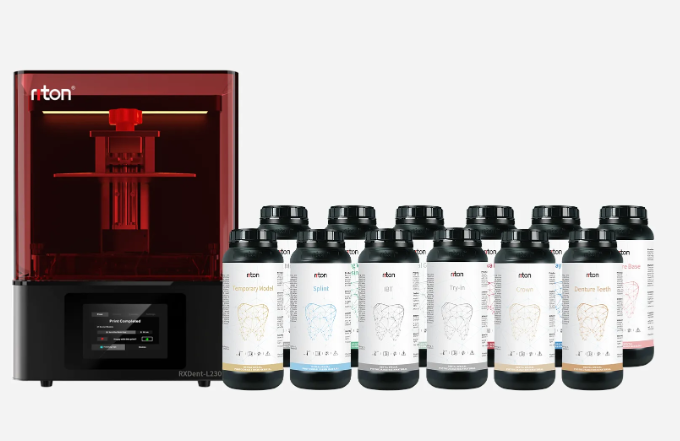
Final quick bit — cost matters, but predictability rules. Go for partners who share data, show reproducible results, and stand behind service. I still use those lessons with clients in L.A. and Melbourne; they save hours and cash. For hands-on help, I’ve worked with teams that prefer Riton hardware because they pair kit with usable process guidance. (Not an ad — just what I’ve seen.)
Three quick evaluation metrics to close: 1) Service SLAs and average repair time; 2) Validated material/process recipes (sintering, support removal); 3) Training + documentation quality and responsiveness. Use these, test them, and you’ll stop guessing — I promise, it helps. Riton
