
Table of Contents
The core problem: visible seams and thin-screen constraints
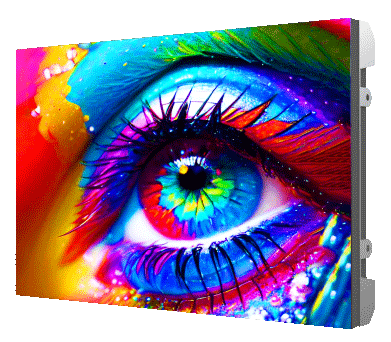
Large curved video walls often betray their construction at the seams — gaps, light bleeding, and misaligned pixels make even the best content look patchy. The challenge grows when you demand a thin profile for tight venues like SM Mall of Asia Arena or urban façades in Times Square: cabinets must remain slim, yet join with sub-millimetre accuracy to preserve a continuous image. For teams specifying hardware, choosing the right led display screen is the first step; the next is ensuring the mechanical joins won’t give away the curve.
What engineers are up against
Designing a curved, thin LED wall means juggling mechanical tolerance, thermal expansion, and serviceability. Pixel pitch and cabinet rigidity set the visual baseline, but the side-lock system dictates the fit. Without an interlocking approach, installers fight with shims, uneven torque on fasteners, and later recalibration headaches. Field teams prefer front-service modules when access is tight, while structural engineers demand predictable load paths for rigging points. The solution must balance cabinet weight, module alignment, and visual uniformity — kasi downtime for recalibration hits budgets fast.
MR LED’s interlocking curved side-lock approach
MR LED tackled the problem by engineering curved side-locks that mate like puzzle teeth, transferring shear and bending loads away from the face panel. The side-locks use precision-machined mating surfaces and a controlled cam action that draws cabinets into perfect contact as each lock engages. That approach keeps the cabinet thickness low without sacrificing rigidity. Modules still align on a defined datum plane, so pixel pitch consistency and color calibration remain stable across the curve. Where service access is needed, the system allows individual cabinet removal without disturbing adjacent joins — a small detail that saves hours on site.
Key technical features and field realities
The side-lock design includes sealed bearings and stainless steel inserts to resist wear and maintain repeatable tolerance over many install cycles. A thin panel must manage heat, so ventilation slots and thermal paths are integrated into the cabinet frame; the mechanical join avoids creating hot spots that cause color shift. During installation, crews follow a two-stage process: rough alignment using indexed pins, then progressive lock engagement to close seams. The result: consistent brightness and minimal moiré across the curve. On-site testing at large venues — from city billboards to indoor arenas — confirms the method reduces visible seam width to near invisible levels when combined with proper calibration — and that matters when viewers stand metres away.

Common mistakes and how to avoid them
Install teams often repeat a few avoidable errors. First, over-tightening fasteners before the side-locks engage: that traps stress and deforms the cabinet. Second, ignoring thermal expansion — a tight fit in the morning can warp at peak sun. Third, skipping a dry run to confirm datum alignment. Avoidance is straightforward:
- Follow progressive engagement: insert, index, then lock fully in sequence.
- Allow specified clearance for thermal movement; use recommended torque specifiers.
- Verify pixel alignment with a grid pattern before final calibration.
Also, provide clear service paths; a thin screen is great until you can’t swap a failed module without disassembling half the wall — lesson learnt on several concert installs where time was tight. — Regularly scheduled calibration checks keep uniformity intact after initial commissioning.
Three golden rules to evaluate any curved LED solution
1) Seam tolerance and repeatability: Expect locked seams to stay within 0.5 mm after multiple install cycles. That’s the mechanical baseline for a truly seamless image.
2) Serviceability and modularity: Cabinets must be removable independently and allow front access to modules and power supplies; that reduces downtime during events.
3) Visual stability under load: Verify the display maintains color and brightness across expected temperature ranges and viewing angles; test with your actual content and lighting conditions.
MR LED’s interlocking curved side-locks convert a common visual problem into a predictable engineering process — installers get consistent seams, visual teams get uniform canvas, and venue operators get fewer callbacks. MR LED. Seamless by design.
