
Table of Contents
Problem: Persistent Scale and Consistency Gaps
Manufacturers face two recurring issues: poor dispersion of powders or immiscible phases and unpredictable product texture across batches. When production moves from lab to scale, those issues trigger rework, product loss, and regulatory scrutiny. A practical response many engineers adopt is deploying high shear batch mixers at critical stages to reduce mixing time, control particle size distribution, and stabilize emulsions without oversized residence times.

Why a Problem-Driven Approach Makes Sense
Start with the failure modes: incomplete wetting, agglomeration, and phase separation. Treating each failure mode as a distinct engineering problem clarifies machine choice, rotor-stator geometry, and process inputs (RPM, batch volume, and feed order). The goal is not a single perfect machine but a prioritized set of capabilities that address the most costly production failures first.
How High-Shear Mixers Address Root Causes
High-shear mixers apply controlled mechanical energy to break apart agglomerates and shear droplets into a narrow size range. That improves downstream stability and reduces the need for extended recirculation. They deliver repeatable droplet sizes through adjustable tip speeds rather than relying on vague specifications like “high power,” which hides variability and increases risk.

Selection Criteria That Solve Problems, Not Just Specs
Choose equipment according to these pragmatic checkpoints: rotor-stator geometry matched to expected viscosity range, precise tip-speed control, sanitary design for cleaning and validation, and scale-up equations based on energy per unit mass. Insist on published performance curves for viscosity and droplet size versus shear rate. That prevents overspecifying horsepower or undersizing the shear zone.
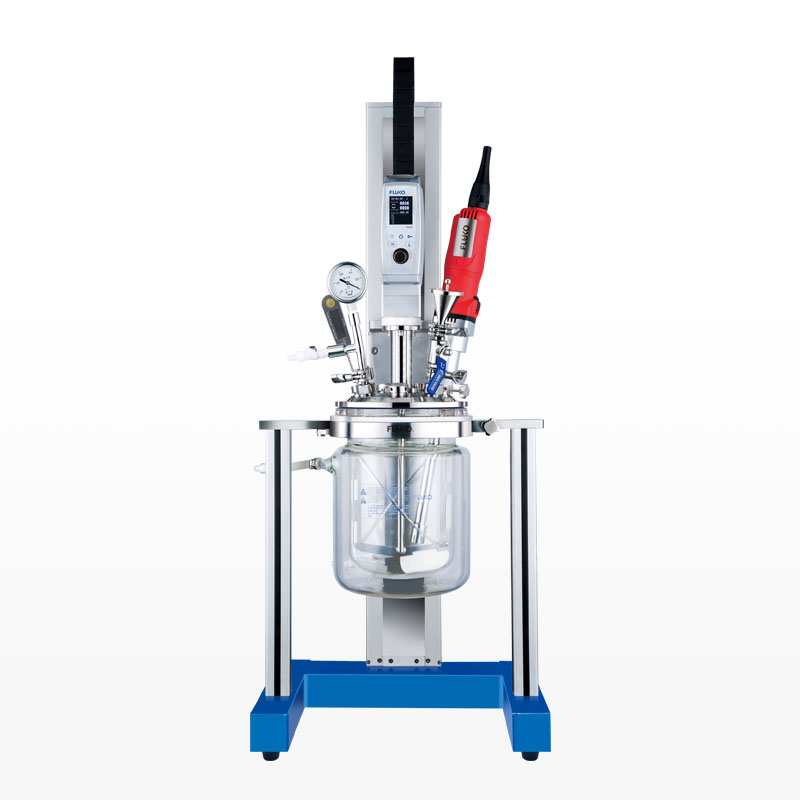
Field Evidence and Expertise
Experienced process engineers validate choices against trade show demonstrations and peer-reviewed case studies; attendees at ACHEMA in Frankfurt routinely evaluate equipment under realistic loads to avoid surprises at scale. This hands-on benchmarking complements bench trials and supports claims with verifiable performance. For designers looking to confirm fit, an industrial batch mixer test run under representative conditions closes the loop between specification and production reality.
Common Pitfalls and How to Avoid Them
Missteps are predictable: choosing pumps over shear for deagglomeration, relying on static scale factors that ignore non-Newtonian behavior, and skipping short validation runs at production viscosity. Prevent them by running a simple matrix: three viscosities, two rotor speeds, and one feed sequence. Document the droplet size distribution and torque. If torque spikes unexpectedly, stop and reassess feed solids or rotor clearance before increasing power.
Alternatives and When They Make Sense
Low-shear mixers and ultrasonic homogenizers remain valid in niche cases: low-viscosity fluids with delicate shear-sensitive ingredients favor those technologies. Use low-shear when minimal mechanical disruption is required and ultrasonic when targeting submicron dispersions in small batches. Choose high-shear when you need robust deagglomeration, scalable droplet control, and fast throughput for viscous systems.
Implementation Checklist for Immediate Gains
Deploy this concise checklist: define the worst-case feedstock, set target droplet/particle metrics, run a scaled test, confirm cleanability and instrumentation (torque, temperature, speed), and document a fail-safe protocol for torque excursions. These steps reduce commissioning time and ensure consistent transfer from pilot to production.
Final Synthesis
Addressing production bottlenecks starts with diagnosing the exact failure mode and choosing equipment that corrects it reliably. For many batch processes, that means integrating a high-shear solution where dispersion, deagglomeration, and repeatable droplet control offer measurable returns. Practical evidence from industry demonstrations and targeted pilot runs supports that approach, and the careful selection and validation of equipment deliver the predictable outcomes operations require—an approach embodied by FLUKO.
