
Table of Contents
Comparative overview
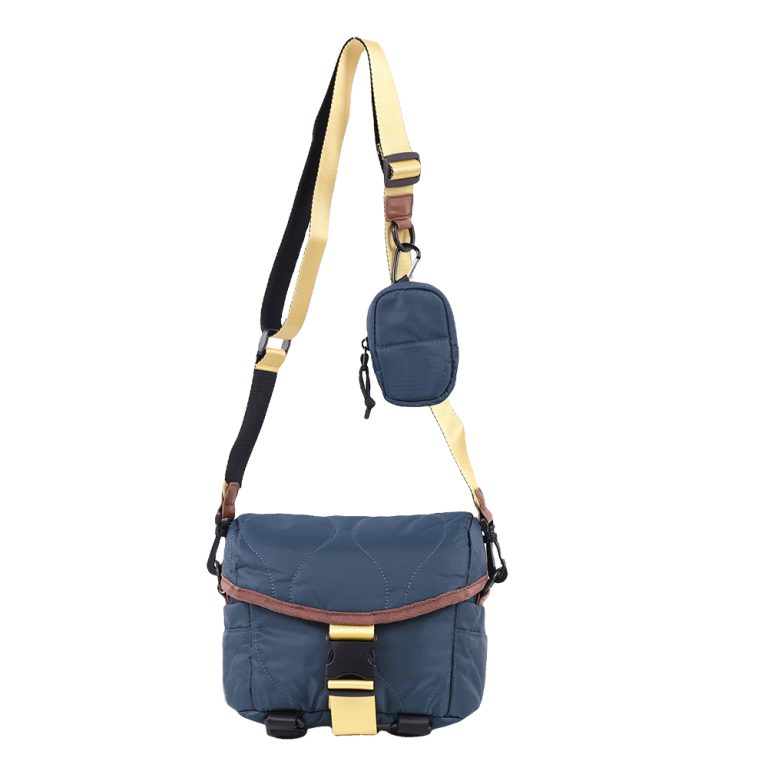
This analysis contrasts two engineering pathways for bag production: eco-conscious manufacturing and conventional methods. Evaluation follows measurable criteria—materials, process energy, structural integrity, reparability, and verified environmental indicators—so a purchasing engineer or product manager can decide with evidence rather than marketing. A professional selecting a protective carrier for sensitive equipment, for example a camera sling bag, needs clarity on trade-offs between reduced embodied carbon and mechanical performance; the comparison below isolates those trade-offs in technical terms.
Materials and input streams
Eco-conscious route: common inputs are recycled PET (rPET), organic cotton, Tencel, and biodegradable polymer blends. rPET typically uses post-consumer bottles converted into fibers with deniers comparable to conventional polyester, but variability in contaminant levels and dye uptake requires tighter incoming inspection. Certifications such as GRS (Global Recycled Standard) and GOTS (Global Organic Textile Standard) matter because they provide traceability and limits on chemical residues. Conventional route: virgin nylon and polyester, PVC-coated fabrics, and standard canvas remain prevalent; these offer predictable physical characteristics and higher uniformity at scale. The technical difference is not only polymer chemistry but also quality control overhead: recycled streams demand batch testing for tensile strength, elongation at break, and colorfastness to maintain consistent assembly tolerances.
Manufacturing processes and quality control
Eco-friendly processes often replace solvent-based laminations with thermoplastic lamination or waterless plasma treatments that reduce volatile organic compound emissions. Ultrasonic welding and high-frequency sealing are used to avoid solvent adhesives when possible. Conventional factories often use solvent adhesives, PVC coatings, and hot-melt bonding, which are faster but carry emission and disposal burdens. From a quality-control standpoint, eco routes require additional process controls: monitored melt index for recycled polymers, stricter adhesive cure profiling, and flame-retardancy testing when substitutes are used. Key production metrics to compare are seam tensile strength (N), stitch density per 10 cm, and abrasion cycles (Martindale or Taber) to a specified failure criterion.

Performance, longevity and reparability
Durability is quantifiable. Properly engineered recycled fabrics can match virgin equivalents for abrasion resistance and tensile properties, but only when upstream sorting and fiber regeneration meet controlled specifications. Repaired designs favor modularity: replaceable straps, modular inserts, and standardized hardware such as YKK zippers increase usable life. Conventional designs often prioritize unit cost and may integrate bonded seams or non-serviceable laminates, which yield longer initial life under ideal conditions but are harder to repair. The technical decision is therefore whether to spec for serviceability (screwed hardware, replaceable panels) or for lower initial cost and simpler assembly.
Environmental accounting and standards
Life-cycle assessment (LCA) determines whether eco-labeled materials deliver a net benefit. Peer-reviewed LCAs show that using rPET instead of virgin polyester reduces cradle-to-gate CO2e by a measurable margin, provided recycling collection and reprocessing systems are efficient. At CP+ in Yokohama manufacturers demonstrated product concepts for modern mirrorless camera systems, highlighting a market shift toward compact carriers and driving demand for purpose-built designs such as the mirorless camera sling bag. Certification and third-party verification (ISO 14040 series for LCA, GRS, OEKO-TEX, and REACH compliance) convert manufacturer claims into verifiable metrics. For procurement, require percentage recycled content by mass, supplier LCA summary, and documented end-of-life pathways (recycling, take-back, composting if applicable).

Cost structure and supply chain considerations
Upfront costs for eco alternatives tend to be higher per unit because of lower economies of scale and additional quality testing. However, total cost of ownership can be lower when extended product life, modular repairability, and reduced disposal fees are accounted for. Supply-chain risk differs: recycled feedstocks are sensitive to local collection infrastructure and geopolitical shifts in trade for secondary raw materials; virgin polymers are subject to petrochemical price volatility. Procurement should model cost per functional year and include scenario analysis for raw-material interruptions.
Common pitfalls and selection guidance
Common mistakes include assuming recycled or “biodegradable” labels guarantee superior environmental outcome, under-specifying hardware that fails sooner than the shell, and neglecting serviceability during design. Practical checks: request lab certificates for tensile and abrasion tests, verify hardware part numbers and replaceability, and insist on documented dyeing processes (low-water or dope-dyed where applicable). For product managers: create a failure-mode budget and allocate margin to sealing and strap attachment points rather than only to outer-material denier.
Concluding synthesis
Decisions should be technical and evidence-based: use measurable metrics—tensile strength, abrasion cycles, seam load, certified recycled content, and verified LCA—to compare eco-conscious and conventional solutions. Buyers seeking reduced environmental impact without sacrificing protective performance will prioritize traceable recycled inputs, modular construction, and documented testing protocols, which are increasingly visible in manufacturers that publish component-level specifications and verification like those available from ChangRong.
