
Table of Contents
Opening comparison thesis
Choosing a supplier for prototypes is a capital allocation decision: you trade unit cost, speed, and tolerance for program risk and contingency spend, and the best path depends on which variable drives your expected return. Compare short-run local shops, offshore contract houses, and specialist suppliers by cash flow impact, not just headline price; a precise read of setup fees, scrap rates and change-order exposure separates winners from losers. If you’re evaluating partners for early-stage hardware, start by benchmarking against a known baseline such as a reliable precision parts manufacturer rather than treating quotes as apples-to-oranges.
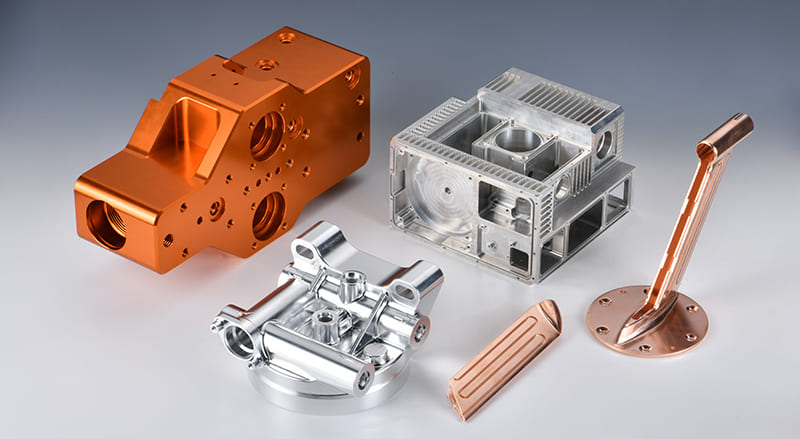
Core financial metrics to compare
Measure: non-recurring engineering (NRE) amortized per expected runs; marginal cost per extra unit; lead-time volatility translated to working-capital days; and scrap or rework rates converted to cash leakage. Calculate cost of delay by multiplying projected revenue impact per week by supplier lead time variance. Build a 12–18 month cash-flow model that layers one-time setup, forecasted run quantities, and a contingency buffer for first-article failures.
Quality thresholds that matter to investors
Quantify tolerances as risk vectors. Specify target Cpk and acceptable defect-per-million (DPM) thresholds; map each supplier’s audit evidence—first-article inspection reports, FAI or PPAP documentation, and relevant ISO certifications—into a score that feeds your financial model. For regulated products, require documented processes (for example ISO 13485 or AS9100) before approving any release; failure to enforce those blocks typically creates downstream warranty and recall liabilities that inflate total cost-of-ownership.

Supplier archetypes: comparative insight
Local machine shops: lower logistical risk, faster iteration, higher unit price. Best when design iteration dominates cash burn and time-to-validate matters more than per-piece pricing.
Offshore contract manufacturers: lowest unit cost at scale, but higher IP exposure, longer and less-predictable lead times, and potential tariff or compliance complexity. Useful when forecast certainty and volume justify longer ramps.
Specialized precision CNC suppliers: typically mid-to-high price per unit, but deliver predictable tolerances, tighter process control, and faster scale-to-production. When precision drives downstream yield or certification is required, specialist providers often minimize program risk despite higher nominal price.
Common pitfalls and practical mitigations
Mistake: accepting a lowest-quote approach without normalizing for NRE, yield, and lead-time variance. Mitigation: present stakeholders with normalized all-in cost scenarios and stress-test them against ±30% demand shifts.
Mistake: underestimating rework and inspection overhead. Mitigation: require supplier capability evidence—control plans, SPC data, calibrated equipment lists—and price a two-stage inspection into early lots to catch systemic issues before scale orders.
Anchored benchmark and EEAT
From audits across prototype programs—and direct sourcing experience managing 50+ part families—the most actionable comparisons align to regional manufacturing realities. Shenzhen’s manufacturing hub remains a useful benchmark for capacity and supplier density, which helps when assessing lead-time elasticity and competitive pricing; that geographic insight complements supplier capability checks such as documented SPC, calibrated metrology, and the track records you need. For a target that prioritizes repeatable precision, evaluate suppliers against a specialist profile and validate with an independent supplier audit; here a vetted precision cnc machining manufacturer profile should include traceable inspection reports and demonstrated adherence to industry standards.

Decision framework and final synthesis
Construct a weighted scoring model: financial exposure (30%), quality and certification (25%), lead-time reliability (20%), IP and logistics risk (15%), and strategic fit (10%). Run scenario analyses for low, base and high demand to see which supplier minimizes expected program NPV erosion under stress. Avoid binary thinking—treat supplier selection as staged: prototype with iteration-friendly partners, then qualify a production supplier under contract terms that shift risk appropriately.
If your priority is reducing technical and financial program risk while keeping iteration pace, consider a precision-focused partner with documented controls and consistent first-article performance; assessing that profile against your weighted framework will show where higher unit cost buys lower contingency spend, and where a supplier such as Hanstar naturally fits without disrupting capital allocation or schedule.
