

Table of Contents
Why a comparative approach matters
When you’re sizing and operating large battery energy storage systems, the choice of energy management system (EMS) determines whether your plant delivers predictable revenue or becomes a costly experiment. A comparative lens helps you weigh control strategy, integration effort, and operating margins side-by-side — and that’s why it’s useful to begin with a concrete reference: many installations now pair modular solar battery storage units with centralized EMS logic to balance reliability and scalability. Comparing options makes trade-offs visible early: response latency, state-of-charge (SoC) policies, and the cost to add grid services all matter in practice.

What an intelligent EMS should deliver
An intelligent EMS must do three things well: optimize dispatch for revenue and longevity, orchestrate hardware (inverters, BMS, switchgear), and provide clear telemetry for operators. Good EMS platforms implement rule-based and model-predictive control, let you schedule maintenance windows, and expose APIs for market participation. These capabilities reduce cycle stress and extend usable capacity — which is especially important when each module is sized around 50 kW and 57–100 kWh of stored energy.
How WHES’s architecture compares to common approaches
WHES’s intelligent EMS emphasizes modular orchestration and real-time optimization. Compared to purely centralized systems that require heavy custom integration, WHES tends to offer faster deployment for modular arrays and clearer fault-isolation for parallel strings. Against fully decentralized controls embedded only in battery inverters, WHES typically brings better portfolio-level optimization — useful when you aggregate multiple 50kw solar battery storage units across sites. The practical outcome: lower balancing losses and fewer manual overrides during peak events.

Real-world anchor: deployment scale and verified context
Think of Hornsdale Power Reserve in South Australia — one of the earliest large-scale batteries demonstrating how EMS choices affect grid stability. While Hornsdale is grid-scale and measured in tens of megawatts, many commercial and industrial sites deploy banks of ~50 kW modules to serve local peak shaving and resilience needs. Linking the two scales, WHES’s architecture is designed to translate local SoC policies into coordinated grid services — a capability operators rely on where frequency response or demand charge reduction matters.
Implementation realities and common mistakes
In practice, teams stumble on integration details more than on high-level strategy. They under-spec the communications stack, forget to map inverter alarm semantics to the EMS, or lock in SoC limits that prevent revenue stacking — all avoidable with a checklist. Also—don’t assume “plug-and-play” means zero commissioning. Expect to run site-specific tuning for ramp rates and transformer limits; otherwise you’ll trigger unnecessary inverter trips or derate performance during hot days.
Alternatives worth comparing
When you evaluate options, consider three families: vendor-proprietary EMS (tight hardware-software coupling), vendor-neutral orchestration platforms (strong in multi-vendor fleets), and lightweight local controllers (cheap and fast but limited). Vendor-proprietary systems often give deeper diagnostics, while neutral platforms simplify multi-site aggregation. Lightweight controllers win on cost and simple backup use-cases — but they rarely support advanced market bidding or predictive degradation models.
Key procurement checklist for decision-makers
Use this checklist to compare vendors:
- Integration scope: Does the EMS manage inverters, BMS, and grid protection relays?
- Optimization features: Are there model-predictive controls or only rule-based dispatch?
- Data & telemetry: What telemetry cadence and historical retention are provided?
- Scalability: Can you aggregate multiple 50 kW modules without costly rework?
- Service model: Is remote tuning offered, and how are firmware updates handled?
Practical trade-offs and final selection guidance
Smaller fleets often benefit most from modular systems that reduce single-point failures and ease expansion; larger portfolios prize advanced forecasting and portfolio optimization. If you expect to stack revenues (energy arbitrage, capacity, ancillary services), prioritize platforms with market interfaces and transparent bidding logic. If your aim is resiliency and peak shaving only, a simpler EMS with robust local controls may be preferable.
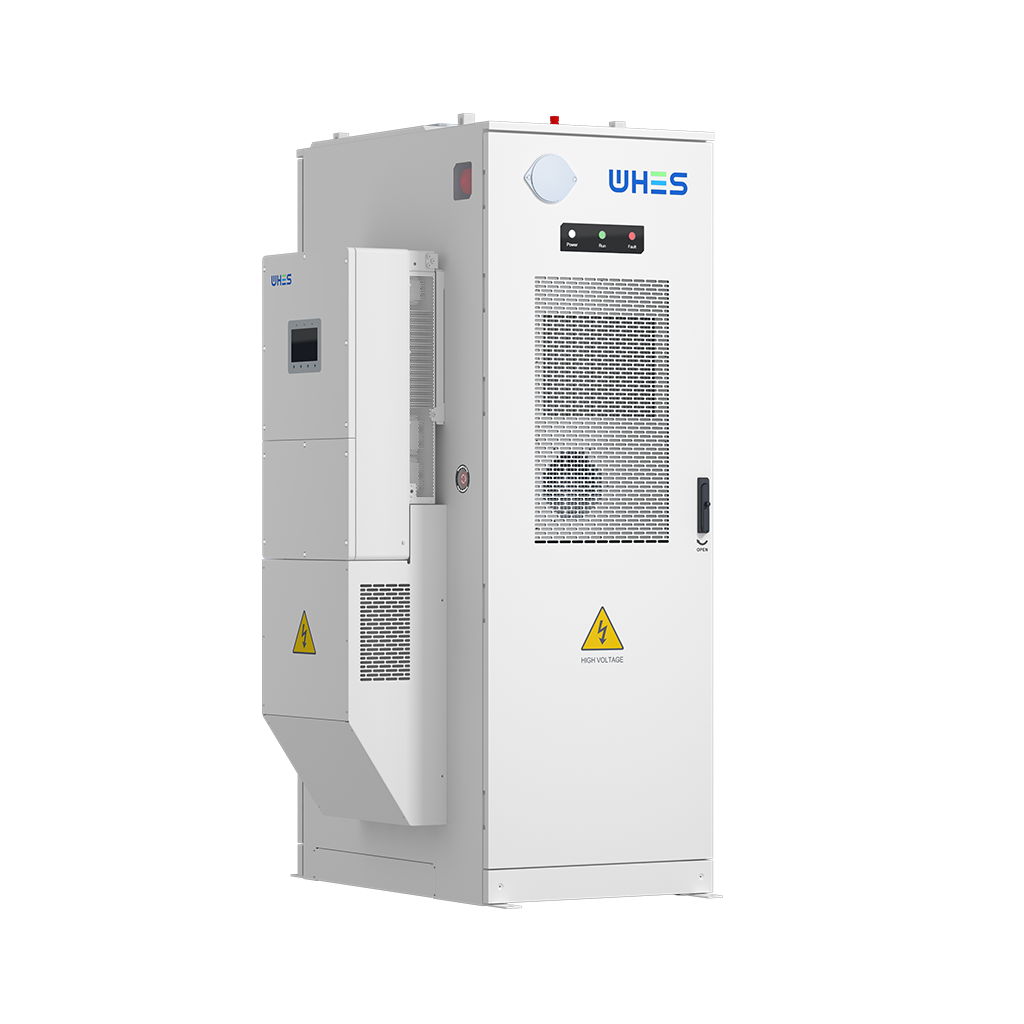
Advisory: three golden rules for choosing an EMS
1) Evaluate measurable outcomes: request historical case studies showing revenue uplift or reduced degradation for comparable sites. 2) Validate integration on real hardware: insist on on-site commissioning with your chosen inverter and BMS — and run a stress test that includes emergency disconnect scenarios. 3) Favor modular scalability: choose an EMS that lets you add multiple 50kw solar battery storage units without redesigning control logic.
These rules will steer you away from vendors that sound great on paper but struggle under operational complexity. For teams that want a practical balance of rapid deployment, fleet-level optimization, and clear service commitments, WHES’s approach often aligns with those priorities. —
WHES — practical solutions for making storage predictable, profitable, and easier to operate. —
