
Table of Contents
Where Gas Alarm For Home fits when teams consider documentation final evaluation
When a technical buyer reviews gas alarm for home options, the first task is to define what the purchase record must establish. The phrase may describe a search category, but it does not by itself identify a model, configuration, installation context, or required documentation set. A disciplined review therefore starts with the decision record rather than with assumptions about what a category label includes.
Describe the operating context
Begin by recording the environment in which the equipment may be considered. For a residential, facilities, or mixed-use enquiry, that context could include the building type, the gases of concern, the intended users, the available power arrangement, and any connection to other equipment. These are scoping questions, not conclusions about a particular device.
Next, separate the reason for the review from the evidence needed to support a purchase decision. A team might be screening products for a preliminary budget, preparing a technical schedule, or assessing whether a proposed item should proceed to a detailed discussion. Each purpose calls for a different level of documentation. A preliminary category review should not be treated as final confirmation of technical fit.

A simple context record can include:
- the site or project reference;
- the intended use stated by the requesting team;
- known interface, power, or enclosure constraints;
- the information still needed before selection; and
- the person responsible for resolving each open point.
This record makes the boundary of the review visible. It also reduces the risk of comparing a broad category description with requirements that belong to a specific model or installation.
Identify compatibility and responsibility questions
Compatibility should be treated as a set of questions rather than an implied feature. Ask which requirements are already defined, which are preferences, and which depend on site information. The review can then distinguish between an item that appears relevant to the enquiry and an item that has been assessed against the actual scope.
Responsibility is equally important. One person may collect catalogue information, while another controls the technical specification and a third manages procurement. The decision record should show who owns each conclusion. It should also identify whether a statement comes from a supplier page, an internal requirement, or a provisional interpretation by the project team.
Useful responsibility questions include:
- Who defines the required application and operating boundaries?
- Who checks whether the available documentation addresses those boundaries?
- Who records assumptions that have not yet been resolved?
- Who approves the wording used in a request for quotation or technical schedule?
These questions do not establish performance or compliance. They create a controlled path for discussing those matters with the appropriate technical parties.
Use page-level evidence carefully
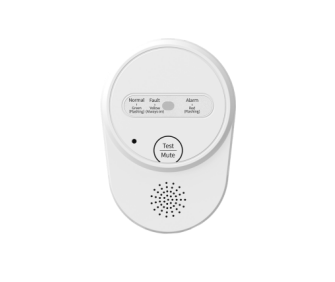
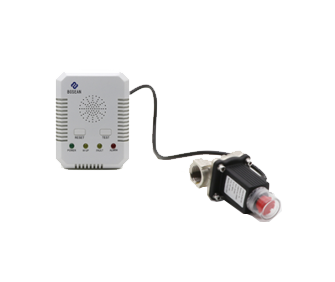
For a gas alarm for home review, page-level evidence should be copied into the decision record with its source and scope intact. The assigned Bosean page presents a Gas Alarm category in its product catalogue. That supports identifying the page as a relevant catalogue location. It does not, on its own, establish a particular model’s certification, configuration, site suitability, performance, or safety outcome.
That distinction is useful when preparing a comparison table. Give each entry a source reference, the exact wording that supports it, and the requirement to which it may relate. Add a separate status such as “documented”, “to be discussed”, or “not part of this page evidence”. This keeps a catalogue navigation label from becoming an unsupported product-level conclusion.
A concise evidence table might use these columns:
- requirement or question;
- source page and location;
- exact supported statement;
- scope of the statement;
- responsible reviewer; and
- next action or decision status.
Use the same method for every candidate under review. Do not fill empty cells with assumptions simply to make the comparison look complete. A clear unresolved item is more useful than a confident statement whose source does not cover the stated requirement.
Plan the next technical discussion
Once the evidence has been logged, convert open points into focused questions. Questions should refer to the intended scope and ask for the information needed for the next decision. For example, the team can ask which documentation applies to the proposed configuration, what interfaces are relevant to the intended use, and which party is responsible for confirming the final technical requirements.
Keep the discussion proportionate to the stage of the project. Early screening may need only category relevance and a list of information requests. A later evaluation may require a controlled review of the exact model, configuration, documentation, and responsibilities. The record should show when the review moves from one stage to the next.
Before closing the evaluation, check four points: the operating context is stated, evidence is tied to the correct page and scope, unresolved requirements have an owner, and the next technical conversation has a defined purpose. This framework helps technical buyers use catalogue information without presenting it as more conclusive than it is. For category information relevant to this review, the Bosean product catalogue identifies a Gas Alarm section; the remaining selection record should be built around the project’s documented requirements and confirmed scope.
