
Table of Contents
Opening: Scenario, Data, Question
I picture a small upstream lab in Boston: three 2-L bioreactors at 03:00, a single metric changing the whole run. Recent internal runs show a median titer gap of 28% between legacy feeds and optimized blends—so where do you invest first? In my work I push practical tweaks to cho cell culture processes and I watch cho media choices decide success or stall. Think of this as a short, hard set with focused reps—clear goals, measurable gains. (No fluff—just data.) Let’s set the pace and move to the pain points that most teams miss.
Part 1 — Deep Faults: Why Traditional Solutions Fall Short
cho cell culture often hits a ceiling not because of cells but because of the media strategy around them. I’ve seen identical CHO-K1 strains diverge wildly when labs stuck with outdated serum-free recipes and one-size-fits-all feeds. In March 2016, at a pilot in Cambridge, MA, we swapped a standard basal for a targeted amino-acid enriched medium in a fed-batch 5-L bioreactor and titer climbed 35% in three weeks. That was a single change with measurable payoff—so I know the failure modes: poor nutrient balancing, ignored metabolic flux shifts, and feed timing that treats cells like machines rather than living systems. These are not abstract problems; they cost real runs, real dollars, and the team’s morale.
What exactly goes wrong?
First, many teams rely on generic feed regimes (pulse every 48 hours) which ignore the culture’s metabolic signals—lactate spikes, amino-acid depletion, osmolarity drift. Second, vendors sometimes bundle media that mask short-term gains but erode long-term stability—lower glycosylation consistency, batch-to-batch variance. I once audited a contract manufacturer where inconsistent excipient levels forced three re-runs in Q4 2021; the client lost five production days and missed a regulatory milestone. These are fixable with targeted assays (glucose, glutamine, lactate) and tighter control of parameters like pH and DO in the bioreactor. You don’t need theory—you need a plan with actionable assays and incremental changes. Trust me, that focus repays itself.

Part 2 — Forward-Looking Comparison: Choosing the Better Path
Compare two paths: keep pushing with a legacy basal and hope to squeeze a few percent, or adopt a modular cho media strategy that adapts feed composition to cell metabolic state. I prefer the latter; we moved a mid-size client from a constant-rate feed to a split-feed schedule and swapped to a chemically defined, hydrolyzed-peptide supplemented medium—result: 27% higher titer and tighter glycoforms across three consecutive runs. The comparison isn’t theoretical. It’s a ledger entry: faster runs, fewer failed batches, and predictable scale-up. Use metrics—titer, viability, and product quality—as your referee.
What’s Next?
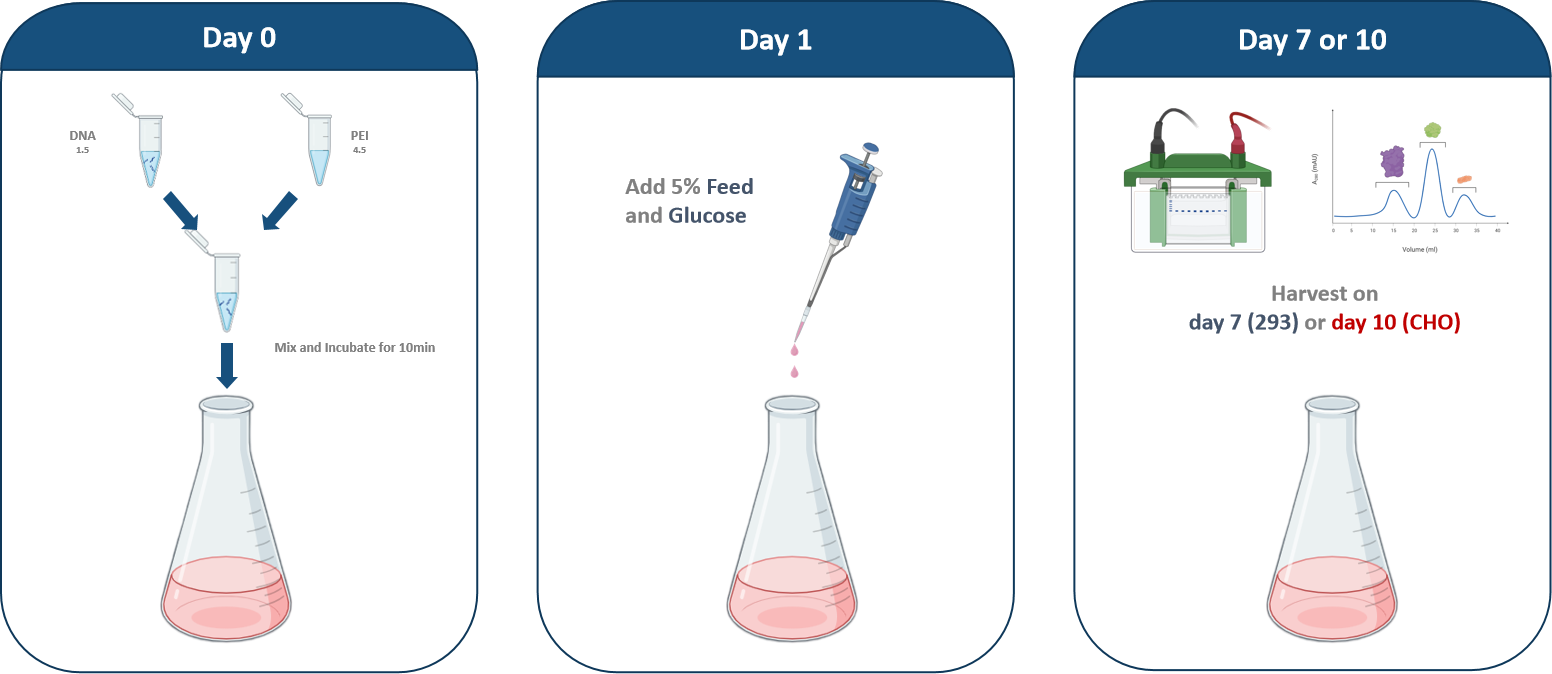
Look ahead: integrate inline sensors (glucose probes, capacitance sensors) with adaptive feeds; test targeted additives like manganese for glycosylation tuning; run small-scale factorial DoE to map responses before you touch a 200-L tank. We ran a DoE in July 2019 using Xuri rocking bioreactors and found a sweet spot for pH setpoint that improved Fc-fusion homogeneity—small experiment, big impact. Compare options on cost per gram, consistency, and scale predictability. — these three metrics will keep you honest.
Closing: How to Evaluate Solutions (Advisory)
I’ve spent over 18 years in bioprocessing and B2B supply for pharma clients; I’ve stood over benches at 05:00, watched time-sensitive runs recover, and held teams to measurable targets. Here are three concrete evaluation metrics I use when choosing media strategies: 1) Delta titer per change — measure percent titer lift per media tweak; 2) Batch-to-batch CV for glycosylation — aim under 10% CV for critical quality attributes; 3) Cost per active gram at scale — include feed consumption and extra QC runs. Apply these and you’ll see which media gives real ROI, not just lab hype. I prefer clear numbers over sales talk, and I press teams to pilot quickly—one week of data beats a month of debate. For practical support and tailored media options, consider partners who understand scale and supply: ExCellBio.
