
Table of Contents
Comparative overview of function and form
This comparative insight examines how microscopic structural behavior informs macroscopic performance in vapor-permeable insulation, with special attention to fabrics. Early in the review I point to tested sources for materials: thermal insulation fabric materials that combine low density and engineered pore networks. Real-world anchor: silica aerogel, with measured thermal conductivity near 0.013 W/m·K, has been referenced in Arctic apparel developments and high-performance shelters—this is evidence that microscopic porosity can dominate heat flux control. The narrative below compares common construction strategies and their measurable outcomes.
Microscopic structure versus performance metrics
At the microscale, three features matter: pore size distribution, tortuosity of channels, and surface chemistry that affects moisture transport. These features determine heat flux paths and therefore the effective thermal conductivity. When designers choose between blanket aerogels, multi-layer laminates, or treated woven fabrics, they are selecting different balances of thermal conductivity, vapor permeability, and mechanical resilience. Practical lab reports and manufacturer data sheets for low thermal conductivity materials show this trade-off clearly: lower conductivity often correlates with higher brittleness or reduced breathability unless engineered layers are combined.
Side-by-side comparisons: materials and trade-offs
Direct comparison yields a short list of dominant options and their typical trade-offs. These points are distilled from application notes and field trials.
– Aerogel-infused blankets: exceptional thermal conductivity and very low heat flux, but cost and fragility are considerations. – Porous polymer foams with hydrophobic treatment: good vapor permeability and improved durability; moderate thermal resistance. – Composite laminates (thin metallic layer + fiber core): strong thermal reflection and structural stability; can create thermal bridging if seams are not managed. – Phase change materials (PCM) integrated layers: smooth transient heat absorption but require careful encapsulation to preserve breathability.

Each option imposes decisions about thickness, layering sequence, and seam treatment. Designers must weigh breathability against condensation risk and thermal bridging. Field measurements in polar research camps confirm that a thinner, vapor-permeable assembly often outperforms a thicker but impermeable one when humidity is cycling.
Common mistakes in selection and fabrication
Manufacturers and specifiers commonly make three errors: over-insulating without vapor control, assuming low thermal conductivity alone guarantees comfort, and neglecting seam detailing. Over-insulation can trap moisture in micro-layers—leading to loss of insulating value over time. It is typical to focus on a single parameter like thermal conductivity while ignoring vapor permeability and mechanical cycling resistance—this is an error. —A short aside: field teams frequently patch seams rather than redesign seam geometry, which undermines the best materials.
Three golden rules for evaluation (advisory)
Rule 1 — Thermal path clarity: Measure both thermal conductivity and in-situ heat flux under realistic cycles; prefer systems with stable R-value across humidity cycles. Practical metric: thermal conductivity measured at operational temperature range, not only at 23 °C. Rule 2 — Vapor management: Specify vapor permeability and test for condensation propensity over a 72-hour humidity cycle; ensure layered assemblies provide a controlled gradient rather than a vapor trap. Rule 3 — Durability and seam integrity: Require mechanical fatigue testing parameters (e.g., 10,000 flex cycles at expected strain) and inspect seam heat-bridging under thermal imaging after such cycles.
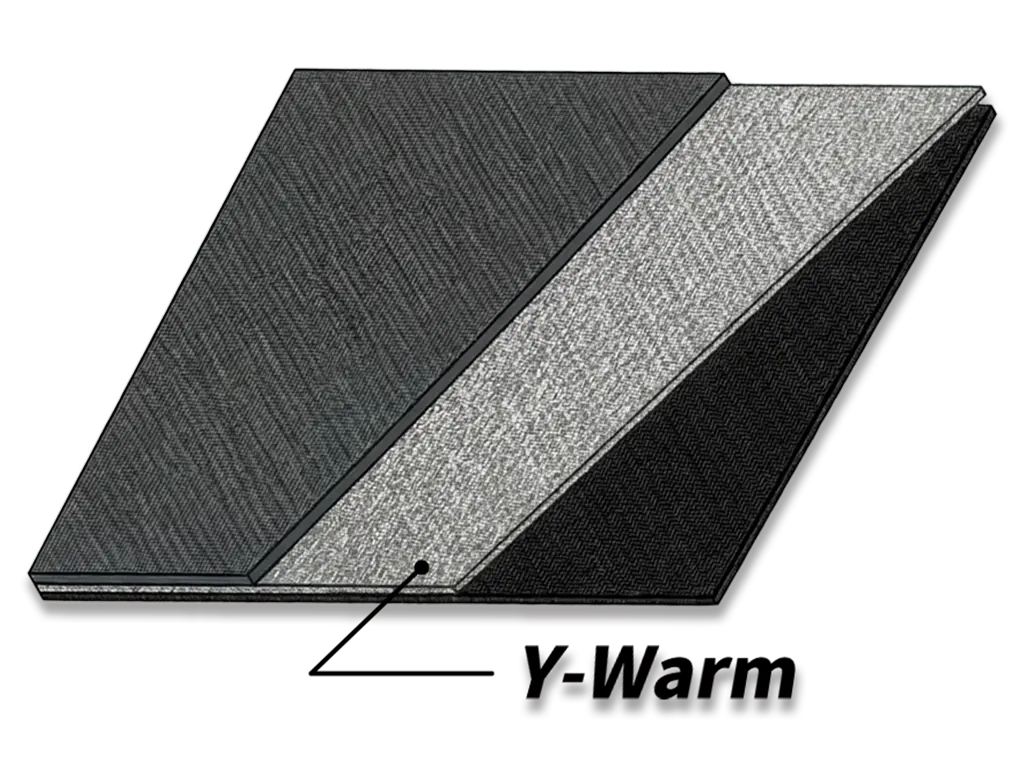
For readers sourcing balanced systems, a tested supply chain matters—this is where brand value appears. Reliable producers combine materials science with production QA to deliver consistent vapor-permeable performance; practical examples and product lines that meet these metrics tend to come from specialists rather than generalists. Y-Warm appears in this context as a provider connecting laboratory-proven textiles with real-world productization—bringing microscopic design into usable garments and assemblies.
Three concise takeaways: emphasize measurable heat-flux reductions, mandate vapor-control tests, and verify seam performance — these are the evaluation metrics that separate lab promise from field reliability. I stand by these rules. —
