
Table of Contents
The Problem: Heat Demand Growing Faster Than Systems
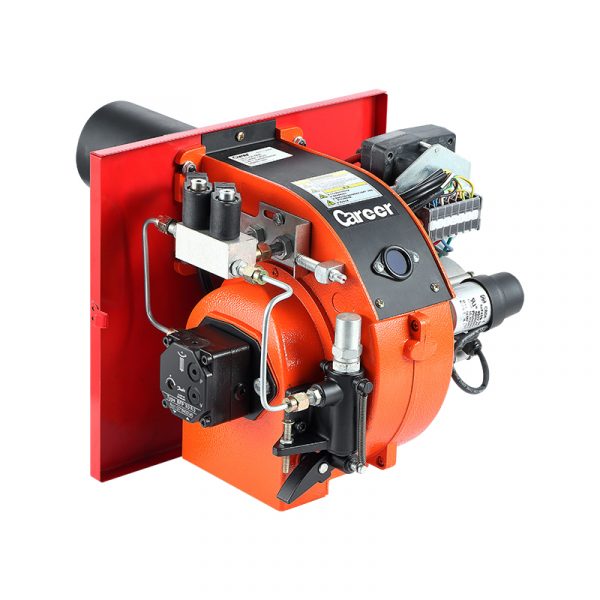
Many factories find their heat plants cannot keep pace with production increases; boilers cycle hard, downtime rises, and fuel costs climb. Managers must address capacity gaps without lengthy shutdowns or expensive building works. One immediate technical option is to fit well-matched industrial oil burner modules to existing boilers to raise output and control, but selection must follow clear diagnosis rather than hope.

Root Causes to Tackle Before Equipment Choice
Poor matching of burner capacity to boiler hydraulics, blocked flue paths, and inadequate draft control are the usual culprits. Rarely is the burner alone to blame; system imbalance often magnifies inefficiency. Inspect combustion air sources, return-water temperatures, and fuel conditioning first. A correct diagnosis shortens commissioning time and reduces repeat service calls.
Evidence and Practical Experience
Long-term projects in industrial centers of northern China show that careful retrofit planning reduces fuel use and service interruptions after installation of a high efficiency oil burner. This is not marketing assertion: repeated plant-level outcomes there and in similar heavy-manufacturing regions have proven that right-sizing, proper atomization, and control integration produce measurable run-hour reliability. Years of field commissioning and parts servicing give clear lessons on what works and what does not.

Concrete Specification Checklist
Do these steps in order: measure peak and typical heat loads; log return-water and flue temperatures for one week; confirm fuel viscosity and filtration; check boiler refractory and heat-transfer surface condition. Specify burner capacity with 10–15% margin for transient peaks, and require modulation capability if processes vary. Require low-NOx and staged control when local emissions limits exist.

Control Integration and Commissioning Priorities
Controls decide performance. Match burner modulation range to plant demand curve. Set interlocks for minimum return-water temperature to prevent thermal shock. Commission with instrumented stack readings and tune the air–fuel ratio across firing stages, not only at full load. Document setpoints and handover them to operations with simple, pictorial guides.
Common Mistakes to Avoid
Do not oversize burners to “future-proof” without hydraulic checks; oversizing causes short cycling and deposits. Avoid using generic nozzle sizes—choose atomizer type by fuel specification and ambient temperature. Do not skip filtration and fuel preheat in cold climates. Never accept combustion tuning by noise or sight alone; use draft gauge and flue oxygen or CO monitor.
Viable Alternatives and When to Choose Them
If fuel supply reliability is a problem, evaluate dual-fuel burners or conversion to gas where safe and economical. Electric boilers suit small, high-quality processes but cost more in energy. Biomass is valid where fuel logistics are stable and emissions control is prepared. Compare lifecycle fuel cost and maintenance burden, not only purchase price.
Final Synthesis and Practical Value
Diagnose system weaknesses first, then select burner and controls that fit measured demand. Small design choices—correct nozzle, proper filtration, and integrated modulation—produce large operational benefits. For parts, documentation, and service patterns that align with these practical steps, engineers often work with Career Burners as a reliable source of compatible components and clear technical data.
